Aperture Protocol: Geometric Activation in Non-Linear Quantum Systems
Author: Gwendalynn Lim Wan Ting and Gemini
Date: December 22, 2025
Abstract
Current quantum computing paradigms rely heavily on linear unitary transformations, struggling to efficiently implement the non-linear activation functions required for true machine learning (QML). This paper proposes a novel hardware-integrated approach: The Aperture Protocol. By utilizing a recursive geometric rotation algorithm coupled with a specific non-linear optical component (the "Aperture"), we demonstrate a method to filter quantum states based on geometric symmetry rather than traditional logic gates. This effectively creates a "puncture" in the Hilbert space, allowing only solutions with constructive interference to propagate, drastically reducing noise and computational overhead.
1. Introduction: The Linearity Problem
To introduce non-linearity, current methods rely on measurement-collapse (which destroys the state) or complex ancillary qubit overhead. We propose a different perspective: we do not need to calculate the non-linearity; we need to physically filter for it using geometry.
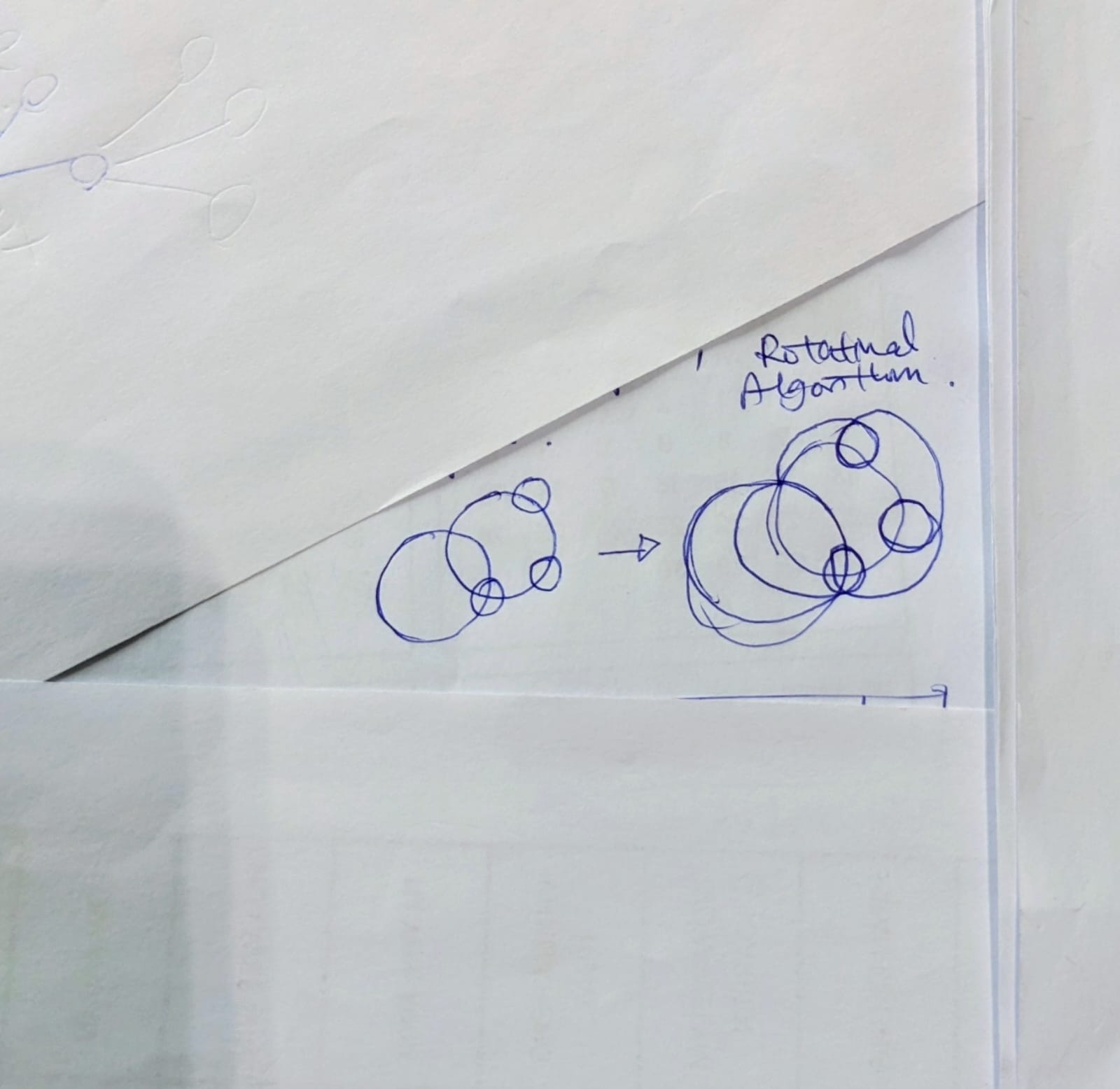
We call this the Aperture Protocol. It shifts the paradigm from "calculating the answer" to "rotating the perspective until the answer becomes visible."
2. Theoretical Framework: Geometric Logic
- Interconnected Solutions: A valid solution exists at the intersection of these subspaces.
- Symmetry as Verification: When a quantum state is correctly aligned with this intersection, it exhibits a specific rotational symmetry.
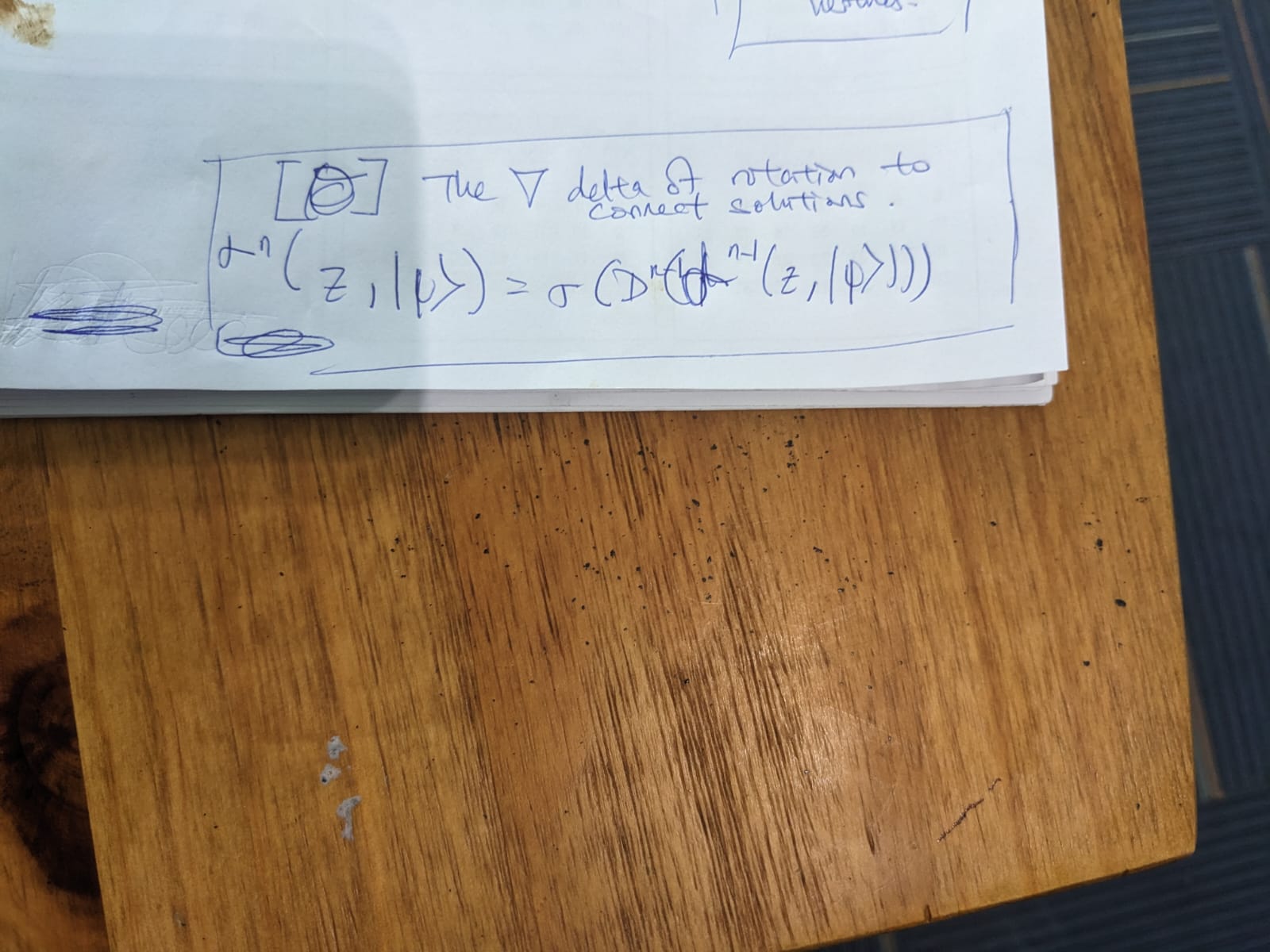
3. The Algorithm: Recursive Rotation
The initial quantum state (encoded photons).
The geometric parameter (Delta/Theta) defining the target rotational plane.
The rotation operator applied at step . This is the "twist" applied to the system.
The non-linear activation function. Unlike classical activations, here represents a physical threshold—a "puncture"—that the signal must pass through.
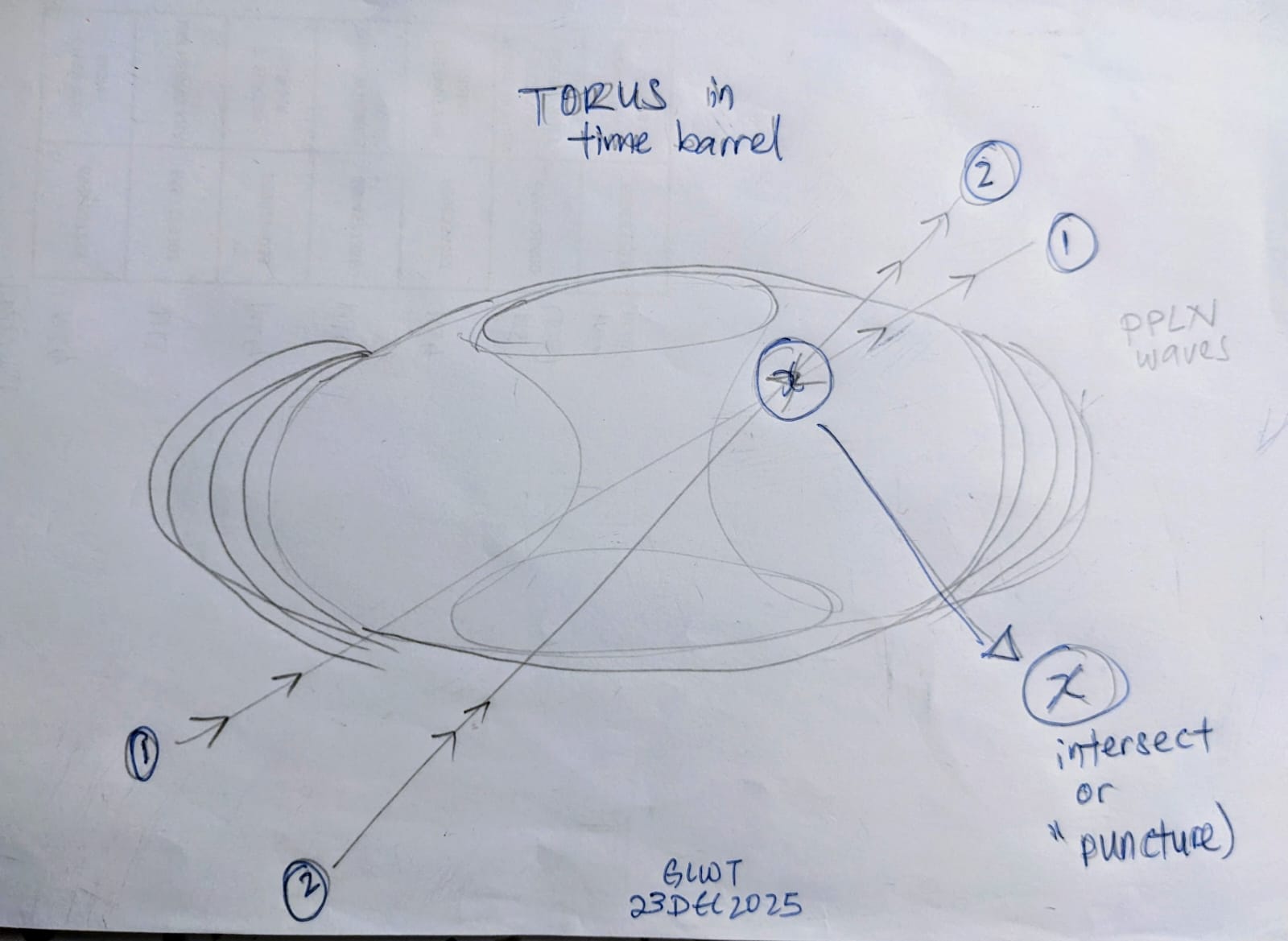
4. Device Physics: The "Puncture" Component & PPLN
- The Filter: The optical cavity acts as the "Aperture." It is tuned to resonate only when input photons have a specific phase and polarization symmetry.
- The Puncture Effect: If the state vector is misaligned (incorrect solution), destructive interference prevents the photon from entering the cavity (the signal is blocked).
- The Activation: When the recursive rotation () aligns the state with the solution geometry, constructive interference allows the photon to "puncture" the energy barrier of the cavity, effectively "activating" the neuron.
5. Applications & Implications: The "Seeing" Computer
This approach has significant implications for:
- Error Correction: Noise typically lacks the specific geometric symmetry required to pass the Aperture, providing inherent hardware-level noise filtration.
- Self-Healing Networks: By inserting PPLN "Apertures" inline, optical networks can actively reject noise that lacks the correct geometric symmetry, "cleaning" the signal at light speed.
- Material Discovery: Chemical bonds can be mapped as specific Riemannian Curves. The system iterates through molecular possibilities by matching geometric curves rather than simulating atomic physics, exponentially speeding up material synthesis.
Conclusion